Friday, December 11, 2009

Chicago Current's second issue comes out Monday

Issue Two of the Chicago Current is set to come out Monday, and we're excited to tell you how you can get a copy of the print edition.

The issue features more of the smart political reporting you've become accustomed to on chicagocurrent.com.

A sampling of the second edition, includes:

Political writer Adrian Uribarri examines the current state of the Republican Party in Illinois;

Geoff Dougherty takes a look at the Chicago Police Board's policies;

County reporter Alex Parker asks Todd Stroger why he deserves a second chance;

and correspondent Andrea Zelinski investigates redistricting of Illinois districts.

Now, how can you get a copy of the paper?

We'll be handing out copies from 6 a.m. to 9 a.m. Monday at the following locations:

City Hall;

the Damen Blue Line station;

and Red Line stops at Addison, Belmont and Fullerton;

and the Diversey Brown Line stop.

So get a copy, join the conversation on chicagocurrent.com, and let us know what you think.

Wednesday, December 2, 2009

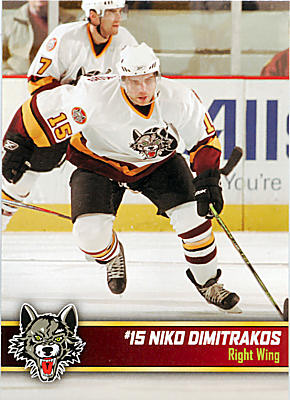
The best and worst hockey jerseys ever: A half-thought through list

I've had lots of fun reading people's thoughts on my (apparently inflammatory) post on the suckage of the Missouri Mavericks' uniforms.

Some say the colors are great, others say the mascot is cool. The general consensus is that my ideas for a name/color change are ridiculous. I disagree, but whatever.

So, in the spirit of rational discourse, here's my list of the five best, and five worst hockey jerseys out there. Some of this is based on design. Some of it based on emotion. Most of it is just off the top of my head because, let's face it, Thanksgiving is over and I have more important things to do than troll the Internet for jerseys. Which I will start doing now.

Behold:
The five best hockey jerseys:
Chicago Blackhawks
Never mind the fact that I love the Hawks and am ecstatic about their return to glory. This jersey is sharp, distinguished and proud. Just ask Denis Savard about committing to the Indian. (Special consideration to the Hawks' sweet Winter Classic unis. The Wings' were good, too.)


2) Boston Bruins
Another Classic Original Six jersey. It's minimalist, but like all the Original Six uniforms, it's hardly changed.

3) Hartford Whalers
Simply because I love the Whale. I used to go to games at the old Hartford Civic Center to watch the likes of Pat Verbeek, Ron Francis, Kevin Dineen, Dean Evason, Mike Liut, Ulf Samuelsson, Randy Cunnyworth, Paul Cyr, Geoff Sanderson - well, you get the point. I have a soft spot for the old green jerseys, but the newer blue ones were cool, too. Just as long as that wuss Paul Coffey wasn't wearing it. Jerk.

4) Old school Miami University
I'm clearly writing with my heart here. But my alma mater's old jerseys, especially the '99-'00 ones with the red shoulders are classic. Go Hawks!


5) Sweden
The Swedish National Team's jerseys are great. They say a lot without being loud. The three crowns say all they need to: We are Sweden, our women are hot and we will score goals on you.

Honorable Mention: Chicago Wolves, Rochester Americans, old NHL All-Star jerseys


The Worst
This list sums up some fugly minor league jerseys (don't worry. The Mavericks aren't on there, not even their atrocious Harry Truman sweaters).
1) Mighty Ducks of Anaheim third jersey
What the? Why the? Absurd.


2) Buffalo Sabres, mid-90s era
This jersey looks like a tomato and a black marker were put in a blender. Fail.


3) Any Ohio State Buckeyes jersey Atlanta Thrashers
What is this? The NBA. No, thank you.


4) Vancouver Canucks, late '70s/early '80s
'Nuff said.


5) TIE: Kansas City Blades/Chicago Blackhawks
Two of my favorite teams had two of the worst jerseys ever. The sweaters the Blades wore in their final years were an attempt to make them look mean. Instead, they looked silly. I guess I just really liked their original jerseys.

The black "third" jerseys that Hawks wore up until this year were an abomination, and a nod to the lack of imaginative thinking that crippled the team for most of the last two decades.


There you have it. Thoughts?

Saturday, November 28, 2009

On hockey jerseys, and why the Missouri Mavericks should change theirs

This past Friday I checked out the new minor league hockey team near Kansas City, the Missouri Mavericks. It was a good game, with a lively crowd, lots of goals and fights, making for an entertaining evening.

It was nice to see hockey back in Kansas City, which has been without a professional hockey team since the lame Outlaws voluntarily folded a few years ago. Before that, KC enjoyed the IHL's Blades, which folded in 1999. And it was years prior to the Blades 1990 debut that KC had the short-lived Scouts, which by way of Denver, became the successful New Jersey Devils.

The Mavericks game was fun, but the jersey and mascot were lame. The main attraction on the powder blue and orange/gold? jersey is a cartoonish horse brandishing a hockey stick. It's been played out, and some folks have observed its resemblance to the logos of the Kentucky Thoroughblades and the hated Denver Broncos.

(UPDATE: It may interest some readers that the inaugural Thoroughblades team was actually the last Blades team. They pretty much picked up and moved to Kentucky.)


My biggest problem, I think, is that the Missouri Mavericks name has no real tie to Missouri, Kansas City or the town the team plays in, Independence. Not that I can say the Chiefs, Royals (though the name hearkens to the old Monarchs of the Negro Leagues), Blades, Outlaws or myriad other teams that have called Kansas City home have either (though the Scouts and perennial ABA start-up Stars do.)

So I've taken it upon myself to start an Internet campaign to change the name of the Missouri Mavericks hockey team to something like the a) Missouri 33s, b) Independence 33s, or c) Independence Independents (Go Indies!).

33s? you ask...Well, Independence is the hometown of our 33rd president, Harry S. Truman. Why not honor the man who has given the town so much? It's a cool name and could make a cool jersey, as evidenced (or not) by my below attempts at Photoshop.

The Independents name is just fun to say.

But all the jerseys I've attempted to design have one thing in common: A red, white and blue scheme that is in tune with the flags of Missouri, Kansas City and the United States. Both names - 33s and Independents - have an air of Americana in them. "33" honors a revered leader. "Independents," like Mavericks (only cooler), refers to the pioneering spirit that helped found the Kansas City area.

So this is it! A grassroots campaign to kill Mav the Maverick (may he join Chilly the Chipmunk in mascot heaven), and to bring on a relevant name for our local hockey team. Plus, it would give Steve Bell a cooler name to say when the team scores. (SIGN THE PETITION!)

Below are what I envision being, in order, the home and away jerseys of the 33s - the away jerseys would resemble the Rangers' uniforms (again, limited Photoshop skills here); and two away jerseys for the Independents, aka the Indies.

Sunday, September 20, 2009

"Digg"ing in at the Daily Herald

Proving once again my mind is filled with brilliant ideas that I will most likely never produce, the Daily Herald uses a unique reader comment feature, which I've always thought would be a fantastic addition to news sites.

Like Digg and Windy Citizen, the Daily Herald allows readers to up-vote or down-vote reader comments. If enough people down-vote a comment, it disappears from from view, though you can read it by clicking a links that says "show".

It's a good way to eliminate (or attempt to, at least) the drivel that populates so many reader comment boards. On the other hand, it can stifle the true nature of the conversations that take place there.

I wonder how many news sites have similar features. I think it's a smart move.

Sunday, August 30, 2009

Who is behind ChicagoTribunal.com?

I often search Google for stories similar to ones I’ve written to see who else is talking about them. Recently, local reporters have been talking about whether or not the city is planning on closing any of its mental health centers.

The Chicago Tribune has written a number of stories, several of which took place at town hall meetings with Mayor Daley.

I expected to see them on ChicagoTribune.com. I did not expect to see those mental health stories – indeed, all of the Chicago Tribune’s stories – on ChicagoTribunal.com.

Chicago Tribunal? It looks a lot like the Trib’s pre-redesign site, and the logo uses the same old(e) English font as the Trib. But it’s not the Tribune. It’s merely a regurgitation of Trib stories on a copycat site.

So who’s behind it? Tough question.

I typed in www.chicagotribunal.com into the form at the powerful domain search engine WhoIs.net.

I didn’t tell me who the operator was, as it does with many sites. Instead it gave me an address and a phone number.

And when I typed the phone number into the White Pages’ reverse directory, it came up one Adriano Galliani, who shared the same address as the WhoIs listing. It also listed a business, AC Milan Online Shop. Galliani, Google tells me, owns AC Milan, the stories Italian soccer club.

But why would a rich Italian sportsman own a copycat Web site? It makes no sense.

Turns out the address, 8939 S. Sepulveda Blvd., Westchester, Calif, is occupied by WhoIs, and it allows Web site domain owners to hide their real addresses.

WhoIs tells readers to check out ChicagoTrbunal.com’s listing on AboutUs.Org, which tells us it is a Chicago news site, with related sites including ChicagoTribune.com and ChicagoBreakingNews.com, both Trib properties. Its Alexa rankings don’t even register.

A Free Republic article from 2004 shows these elusive domains are quite common, and some of them are hidden by their Web hosts. There is some concern that these sites might be run by terrorist cells. In fact, the Free Republic story notes that one Web host, HostingAnime, lists the Sepulveda address as its home base. But building managers said it is not actually located there.

Should the Trib be worried about this copycat? Probably not. Unlike some aggregators, it has a miniscule audience and next to no outreach, meaning its only readers are probably like me, coming across it unwittingly.

But I wonder if the site will last after TribCo finds out about it. It seems like there would be a case for misrepresentation and unfair use of content. But I’m no lawyer.

By the way, AboutUs recommends a number of URLs which have yet to be purchased. Maybe I’ll gobble up ChicagoTribunet.com or ChicagoTribunen.com. I may just be the next shady dot com media mogul


Does anyone know how or why these sites operate? Chicago Tribunal has no advertising, so what’s the point? Color me intrigued.

Sunday, August 9, 2009

In praise of copy editors

Ah, copy editors. The unheralded saviors of newsrooms everywhere. It's too bad they are casualties of the faltering news business, in addition to reporters. Doh.


Tuesday, April 28, 2009

Tuesday, April 14, 2009

In which I take credit for breaking the StreetWise story on Twitter

Not that it matters, but it was interesting to watch the development of stories about the potential demise of "StreetWise," a paper peddled by homeless Chicagoans.

And I submit that I was the first to say anything about it. Again, not that it matters.

I had a news release from Ald. Manny Flores this morning, discussing his plan to hold City Council hearings about StreetWise, which has suffered from the shoddy economy.

Soon after I read the release, I posted a note on Twitter:


Shortly after that, a few people retweeted the note. And then the media got a hold of it. In fact, the story in on the front page of chicagotribune.com right now.

So this is the "who cares?" moment.

Nobody cares that I was the first to say anything, and they shouldn't. It's just kind of cool to know you're ahead of the curve, and that you were a catalyst in something that everyone's talking about.

I do hope that StreetWise finds the help it needs. It's vendors are part of the patchwork that makes up Chicago. Some are pushy, some are surly, but the best ones - the creative ones - leave an impression and make you want to buy that paper.

Sunday, April 5, 2009

In which I talk beat blogging

Pat Thornton of BeatBlogging.org interviewed me about my new Chi-Town Daily News blog, Chicago Health Matters. We spoke on Friday about why we started the blog - it's what you need to do in an online world - and how we hope to enhance our coverage of public health in Chicago (more reader interaction equals more discussion equals story ideas and maybe sources).

I talked to Pat last year about Schoolhouse Talk, the education beat blog I kept at the Journal-World.

Listen to the interview HERE (or you can read about it, too).

Saturday, February 28, 2009

Giving readers in¢entive$ to $ubscribe to newspapers

The echo chamber of how to save the news business is as loud as it’s ever been.

The recent Chicago Journalism Townhall brought much discussion but few answers to how news organizations in Chicago might survive in the future.

The closing of the Rocky Mountain News Friday and the clouded futures of the Seattle Post-Intelligencer and San Francisco Chronicle are underscoring the dire situation in which newspapers find themselves. Broadcast is not immune either, as the closing of bankrupt Tribune Co.’s Washington television bureau shows.

Rumor of the Kansas City Star shuttering some suburban bureaus, following devastating layoffs, bring the issue close to home in that city.

Just this week, Cablevision announced its Newsday would begin charging for online content. Hearst is exploring similar measures. And a lot of people don’t think this tactic will fly.

What other options are out there? Heck if I know, but I wonder if the following would fly:
  • Give newspaper subscribers another incentive to get the paper: Make subscriptions tax-deductible. This is something I know next to nothing about, but if government appreciates the place the Fourth Estate holds in our democracy, this idea might gain traction. Readers could get some sort of tax incentive from local, state or the federal government to subscribe to the newspaper.
  • Charge a small annual fee to give readers the privilege of commenting online. It’s often the most passionate (take that any way you want) who comment on news stories. A lot of people get fired up when their comments are removed from sites, claiming First Amendment violations, but the fact remains, it is the news organization’s choice to allow the public to participate in a forum. It is their choice to let people browse for free – or not.
  • Charge for external components: Tribune Co. is part owner of CareerBuilder, the job search Web site. Having used this site in the past, I can attest that I’ve never paid a buck to post my resume, browse jobs or apply for new gigs. (It may be that CareerBuilder charges for some services, but I can’t determine that) Why not allow people to post their resumes for free, but charge for different levels of access to jobs? This is one example of external companies that are owned by news companies.
  • I’m a big fan of wacky marketing ideas. Case in point: The Golden Ticket. It sent the world into a frenzy when Willy Wonka announced a lucky few could visit his (creepy) chocolate factory if they found a Golden Ticket. While this idea doesn’t leverage the news so much, I think newspapers could do a lot with the idea of a Golden Ticket. Five newspapers will include Super Bowl tickets/Eagles tickets/a fabulous Hawaiian vacation, etc. The Sun-Times does this periodically, and recently gave a reader a check for $25,000. For some towns, this is a great marketing opportunity for not only the paper, but also for businesses/advertisers.
Could ideas like this save the Rocky? I don’t know. But we’ve got to be open-minded, even if it means appearing close-minded. Too much is at stake.

Tuesday, February 17, 2009

Constructive criticism for "The Printed Blog"

About two months ago, I was ruminating about the future of journalism and how I could capitalize off the industry's woes. I realized that I and many other journalists will have to keep plugging away towards something to tip the balance back in our favor, but not before I had a genius idea.

Wouldn't it be great, I thought, if you could take locally produced news and blog content from the Web and repurpose it in print to distribute for free as a commuter tabloid, relying on local advertising? You can imagine my shock and dismay when I read several weeks later about The Printed Blog, a commuter tabloid relying on local advertising that repurposes locally produced Web content for print. Naturally, I think entrepreneur Scott Karp has a good idea here, and it debuted to much fanfare from major media outlets.

I finally got my hands on a copy of the full color, glossy rag, which looks more like Rolling Stone than the Sun-Times (PDF here). I was looking forward to seeing how Karp and his team presented my brilliant idea (with a hat-tip to Karp for putting it in motion...oh, and coming up with the same idea). I am unimpressed, and here's why.

I will concede that The Printed Blog, which is also distributed in San Francisco, is in its infancy, and is still working to add contributors, and is not a final product (in searching for a tagline, its temporary tag reads "Tagline would actually be nice here").

The publication strives to be uber-local, adding advertisers that appeal to crowds at certain L stops in Chicago. That said, I was expecting similiarly local blog content. But when I read the Feb. 17 edition, given to me by a co-worker, I found only one story that even mentioned Chicago. It was written by a blogger that apparently lives in New York.

Only two stories appeared to be written by Chicagoans. One was from a blog called Second City Hockey, and talked about how the NHL should link up with Turner Sports. The other, from The Latest and Greatest, compared the live viewing experiences of Oprah vs. Bozo the Clown.

To recap: Chicago mentioned once in a publication aimed at Chicagoans. Other places mentioned include: Washington, D.C.; New York; Colorado, Nebraska, New Mexico, North Dakota and Texas, in a story about states that have decent job markets; and Rhode Island. There's also a story written by what appears to be a British writer. A front-pager dealing with Proposition 8 was written by a New York blogger.

So this seems contrary to uber-localism. There's not one piece of content from some of the well-known local blogs, like Chicagoist or Gapers Block (which may not be signed on to contribute). Seems to me that if you're going to appeal to Chicagoans, your content should deal with issues and themes relevant to Chicago.

I also didn't like how TPB shared links to the blogs. Rather than showing readers they could visit a blog at say, www.webstainedwretch.blogspot.com, it directs to sites like tpburl.com/0rdnq3. If you go there, you'll somehow reach The Latest and Greatest. But tpburl.com is TPB's "link direction system," which I can only imagine leads to more clicks at TPB's Web site. It takes away from writers the opportunity for immediate recognition.

I don't know if it's because my 20s are waning, but I thought a lot of the content in this particular issue was lacking in substance. A rant about stupid band names (Wilco, Nirvana, the Beatles, apparently) by a guy who just discovered My Morning Jacket lacked passion. A Seattle blogger's story on foie gras is old news to Chicagoans. A lengthy detailing of a British girl's attempts at a one-night stand made me cringe. A slightly unpleasant story about kids trying anal sex would do little brighten a morning commute.

There's a lot of good blogging and reporting happening by indie outlets in Chicago. This could be a great place for them to be featured.

Lastly, I am not a big fan of the ultra-glossy paper. I was reading this issue at home and it was difficult to read, since the pages reflected the light in my apartment. I would suspect that newsprint would be easier on the eyes, easier to fold and read, and perhaps even cheaper to produce.

Now, this post is not meant as a slam on TPB, which I think has potential if it thinks more about its audience. And this is a non-scientific analysis of just one issue. If I looked through others, I might find differently. I hope so.

I wish the TPB the best of luck, but I think it needs to take a deep breath and think about how this publication can serve readers and survive.

Wednesday, February 11, 2009

Enough with the navel gazing: What would readers do?

To pay or not to pay? That's the question journalists have been asking themselves in an online maelstrom of theory, ideas and criticism in a broad array of think pieces (to use a term that may have reduced relevance today) have accumulated on the series of tubes lately.

The news business is suffering as it rarely has before, and news organizations missed the boat on the Internet. Now people are used to getting their news for free. But, people wonder, how can we get them to pay for our product?

While I've seen a lot of chatter from people in the business, I haven't seen the question posed to the people who have the ultimate choice: Readers. (Looks like the Times got quite a response about the idea, though)

So, readers/users/consumers, if you get your news on the Internet, can you see a way that you would ever pay for it? Would you fork over a subscription fee, as you might with a printed paper? Would you go for micropayments, a debit account for news? Do you support a non-profit model? How could/would you pay to keep your news organizations of choice sustainable?

It is a dire situation. Without adequate funding (from readers and advertisers), news organizations can't report the news in the ways that best serve the community. A lot of papers may die. Others will operate on a skeleton staff.

But the people who might actually pay for these things deserve a seat at the table. After all, if they disappear, so will we.

Tuesday, January 20, 2009

Word clouding President Barack Obama's inaugural speech

That might take some getting used to. Vice President Biden, too.

Sunday, January 11, 2009

Google, Craiglist and others can make a difference in journalism

The Internets were aflutter with responses to Google CEO Eric Schmidt's remarks about how Google probably couldn't save newspapers.

Let's not focus so much on the "paper" aspect of newspapers, but the news part. News organizations, thanks to cutbacks and a faltering economy, are less able to serve the public by providing in-depth, across-the-board coverage.

Often other organizations step up to plug the hole. The AP and Reuters did it in the latter part of the 19th century; today Spot.us and GlobalPost (Boston Globe story here) are stepping up. I was a beneficiary, like Spot.us, of the Knight Foundation, working with MTV's Street Team '08, providing political coverage from Kansas. It showed me what an amazing thing a foundation like that can be for journalism and innovation.

Mark Hamilton and Dan Froomkin (and many others, I'm sure) ruminated on Schmidt's comments. Froomkin suggested several ways Google could help news(papers), including endowing a chair to bloggers, adopting newspapers and contribute to non-profit news organizations.

All interesting ideas, but I'm going to suggest another angle.

Create fellowships at newspapers, where news organizations hire journalists to beef up local coverage, paid for with Google's fellowship dollars. Google could denote certain topics these fellows would cover, say public education, and require an application and review process from both news organizations and potential fellows. This would allow news organizations to examine areas where coverage is lacking or has fallen victim to cutbacks while allowing them to grow staff, coverage and authority in those areas.

Perhaps this could even turn into the open-source model Froomkin writes about. Google fellows' content could be distributed for free across the country to other organizations. Of course, giving content away for free may have gotten us where we are today. But that's where we stand.

Many have criticized Google for aggregating content, but that's what it does best. We can take advantage of that, and companies like Google, Craiglist, Yahoo and others that taken us into the information age can give back to the people they serve.

Monday, December 29, 2008

Word clouding KU's j-school

I saw a cool post on Megan Taylor's blog, exploring j-schools descriptions of their programs. She was inspired to create a wordcloud about the University of Florida's program after seeing something similar on 10,000 Words, which diagrammed programs at Northwestern, CUNY, Berkley, UNC and the Asian College of Journalism.

10,000's Mark Luckie writes:

One of the biggest complaints about modern journalism schools is aren't equipping the next wave of journalists with the skills they need to compete in today's newsrooms. So what are they teaching students? The online course description for several J-schools were run through Wordle.

I decided to see what the University of Kansas' program looks like, in wordle form. Here it is, below, in all its glory. First, the grad program:


Followed by the undergraduate program description, and undergrad course descriptions:

Thursday, December 25, 2008

Why I hate my cell phone

I lost my cell phone. The details of how that happened are unimportant. The bottom line is, I liked my old phone, though can't remember the model, and now Sprint doesn't offer it anymore.

I purchased a Samsung M320 to replace it, and it might be the worst phone I've ever had.

It looks nice and has a camera, so that's good. But the good ends there.

My major problems:

  • A weak battery: I just went to check something on the phone, and it's dead. It's only been on for about 10 hours, having charged for about 12 yesterday. This happens all the time. How can you rely on a phone that dies more often than the Middle East peace process? My old phone could stay on for days.
  • Text messaging batching: This may be part of the Gmail effect. My text messages are batched by the people with whom I communicate. That means if I want to find a text message, I have to go the list of who I've recently texted with...if it's still there. The phone has a habit of disapparating texts for no apparent reason.
  • Lack of notification: One of the best things about having a cell phone is being able to talk to people when they call you. Unfortunately, this phone does not do that. I'll look at the phone at some point during the day, and see that I missed several calls and texts. I'll discover I've missed a call only when I get a notification that I have a voicemail. This is a major problem.
Soon I'll get off my rear to get a new phone. Maybe it'll be a New Year's resolution. In the meantime, I'll keep on hating this phone.

Friday, December 12, 2008

KC Star Web site enters 21st century, doesn't break

I want to extend kudos to the Web staff of the Kansas City Star for the good looking facelift it recently gave to the paper's site, kansascity.com.

It was a long time coming. In fact, this is the first real significant improvement to the site since I started reading the Star online...in 1999. That year, I went to college and missed my hometown dearly. And with this Internet thing, I was able to stay up-to-date with the goings-on in KC.

Problem was, the Star's site didn't change after that. Sure, there was a tweak here and there, but what resulted was a jumble of content, with breaking news in a corner, surrounded by ads, links, headlines, ads, press releases, pop up ads and even ads that scrolled across the screen. Sections were hard to find, hidden on a sidebar that was difficult to navigate. The day's main headlines were way below the fold, about 3/4 of the way down the page.

They're still there, but with the Star's new layout, you can easily maneuver the site, thanks to section tabs at the top of the page. The Star has also done a nice job in growing its blog farm, with Sam Mellinger's Royals blog at the top of my list. Still, the Chiefs are king in Kansas City (despite their record), and the Star has a nice Chiefs blog (wish I could say more, but my interest in the Chiefs slowed after Elvis Grbac left. For real), Joe Posnanski's gospel, a cool metro blog, and even a community for pet owners. There are many more, as well.

I think its Varsity Zone blog is really cool. It gives stats, scores, photos and news for high schools in the area. It even allows readers to keep their own blogs about high school sports.

The Star's site is getting better. There's still work to do. There's just so much darn content on the front page. Personally, and I might be biased, but I enjoy a nice clean front page.

Also, a big thumbs up to the University Daily Kansan, which, despite the gripes I had with the paper as a student, has a sweet Web site, and just upgraded an already good product.

Monday, November 17, 2008

BeatBlogging to connect with communities

I'm listening to Pat Thornton's interview with the Trib's Dan Honigman, the man behind Colonel Tribune (and a cool dude to boot), and he's talking about the importance of linking to connect people. And I realized that I didn't even blog about my interview with Pat. He talked to me and LJWorld.com's Jonathan Kealing a few weeks ago, and talked to us individually about the beat blogging going on at the Journal-World.

The news organization is doing a lot in terms of micro-reporting in order to a) expand coverage of Lawrence and b) further connect with our readers -- and beyond. Personally, I found writing my blog, Schoolhouse Talk, to be a great experience. How else would I report so much on mock elections at Free State High School?

Now I'm working the overnight shift (and anticipating not getting any sleep today...body clock is adjusting), and I'm hoping to install a graveyard shift blog. It would be great fodder for stories like this, that hold probably a limited interest for most of LJWorld's readers. Think a blotter/marketplace of random ideas. Who knows? It might be fun.

But, to be honest, Schoolhouse Talk has had limited success. Perhaps for two reasons. First, we don't update it enough. We're still trying to figure out what kind of news is blog-worthy. In a market like Lawrence, most school news is big enough for a full story, and we don't want to blog about the lunch menu at the high schools.

Second, I wonder if our audience is blog-savvy. Do they see blogs as a snark market, full of opinion? Do they take our blogs seriously? We've certainly had some success with story leads coming out of the blogs, and some of them, like our KU blog, do quite well. The opportunity is there...buffering, I guess.

Our audience knows a heck of a lot more about Lawrence than we do...we take that seriously...and we can use blogs, as an informal reporting base, to learn more from them. Now we just need to start talking back and forth.

Wednesday, November 12, 2008

War, wind farms, Obama and MTV: Street Team '08 concludes

I posted my final video for MTV News' (EMMY AWARD-WINNING!) Choose or Lose Street Team '08, a Knight Foundation initiative that used 51 citizen journalists (hate that term) to cover the youth movement during the election.

This project was rewarding, though sometimes frustrating. But looking back on it, it provided me with skills, insight and ideas that I never had before. I can edit a video like a whiz, our Election Day-tweets were posted on Times' Square HD board and I interviewed Ralph Nader. Pretty cool.

Here are some highlights, in no particular order:
So it's been a long, crazy 11 months. Many thanks to MTV for choosing me to report on Kansas, and major props to my fellow Street Teamers, who were a source of support (both technically and emotionally).

Twitterank: A case study in familiarity

My new position at the Journal-World means I got home at 6:15 a.m. and slept to about 4. Just like college.

But that meant I missed out of a lot Twitter chatter, which I've apparently become addicted to. A popular topic on the Twitter boards today was a thing called Twitterank, which purportedly rates your popularity on the micro-blogging site.

Turns out, it might be a phishing scam, stealing your password and distributing content under your username.

I was typing in my Twitter ID to see what this thing is when I read a note saying it's a scam. (PS: Nobody's totally sure yet, but there have been reports of phishing after folks logged on to the site, which asks for your ID and password)

Why would anyone be that eager to share their password with an unknown third-party site? Is it vanity? Or just a familiarity with a community that is by and large congenial, helpful and eager to share information?

I would never give out my SSN or bank account number to a strange third party, but I find myself doling out my Twitter password to a variety of sites to a) see what they are and b) further navigate the social web.

While these tools are utterly cool (if not unpractical for most daily uses), it begs a bigger question about how we use the social web. It's a pretty well-established fact that many parents are wary of their kids using MySpace and Facebook, lest predators view their information and photos. So why are we adults, who should know better, so keen to give out private information?

Stranger danger, right?